Global Learning Strategy for Cooperative Development
  • Home
  • Learning Themes
    • Market Linkages
    • Gender
    • Nutrition
    • Incentives
    • Performance Tools
    • Co-operative Challenges
    • Project Role
    • Stakeholder Dialogues
    • Youth
  • Guidelines
  • Resources
  • Surveys & Research
    • Current Research
    • Online Surveys
    • Survey Results
  • Blogs from the Field
Picture

Co-operative Challenges

On this page:
  • Insights from the Field - Co-operative Challenges
  • Example from the Field - Reducing Side-selling, Rwanda
  • Example from the Field - Selling to External Market Channels, Uganda
  • Example from the Field - Lack of Transparency, Rwanda
  • Example from the Field - Distrust of Co-operative Structure, Uganda

For years, development projects have emphasized the strategy of organizing smallholder farmers into producer organizations and co-operatives in order to increase their bargaining power in the market and empower individual producers through a commonly-owned enterprise. This seemingly logical strategy is often encouraged by development projects without thoroughly understanding the challenges such co-operative formation and support creates.

Insights from the Field

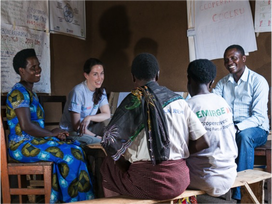
Global Communities invited EcoVentures International (EVI) to run learning workshops with its co-operative development programs in Rwanda, Uganda, and Mongolia. These are insights contributed by the Global Communities' field staff who work closely with co-operatives in the field.
Picture
Several challenges for very poor smallholders operating in co-operatives:

1. Co-operative groups are challenged in interacting with the market. 
  • Co-operatives buy inputs in such small quantities and so infrequently that it is not worthwhile for input supply firms to make an effort to sell to them.
  • Co-operatives produce in such small quantities that it is not worthwhile for buyers to make an effort to buy from them.
  • Co-operative members do not feel comfortable interacting with larger or more formal businesses as they do not understand their business culture and norms.
  • Co-operative members do not feel comfortable negotiating business contracts or even basic pricing and ordering.
  • Co-operatives are influenced by informal rules and norms that limit their ability to interact with other businesses or their ability to benefit from commercial transactions in any significant way.

2. There is  a lack of understanding by the development project of the realities and perceptions of co-operatives within their country's contexts.
  • A development project should understand the realities of co-operatives within their country context. For example, has there been a negative history of co-operatives leaving a lack of trust around this structure? Or perhaps the culture of the community itself is one of a lack of trust and a lack of cooperation, creating challenges within the co-operative structure?

3. There are general management challenges.
  • There is a lack of understanding or knowledge by farmers about the co-operative structure and co-operative management.
  • There is mistrust among co-operative members as well as amongst general members and the management / board. A key challenge within co-operatives is a lack of transparency between the governing board and the general members.
  • There are often a lack of leadership and managerial and financial management skills.

4. There is limited member participation.
  • Members may embrace cooperation but not necessarily collective business (shared finance).
  • Often farmers have individual businesses or other activities, so there is limited participation in the co-operative. The co-operative is often not the main income source for many members so they allocate a small amount of time to co-operative activities.
  • Because of the difference in education levels, some members do not actively participate (due to a lack of self-confidence).
  • Projects often, unintentionally, force cooperation where it would not naturally exist. If, for example, individuals come together in a co-operative structure just to access training that a development project will provide, perhaps there is a better, more effective way to offer training to this community outside of the co-operative structure.
  • Results of trainings take time to materialize. It is also difficult to train all co-operative members, so the challenge exists of ensuring that those who are trained actually pass on this new information to other co-operative members.
  • Not all co-operatives are formed for the “right” reasons. Projects should understand that, unfortunately, individuals often join co-operatives based upon the expectation that they will “get something out of it” in the form of free inputs, access to free equipment, etc. In many parts of the developing world, the aid culture has been full of handouts, and it can often be difficult to change expectations of co-operative members, especially if your project is clearly supporting the co-operative.

5. Co-operative members do not support the co-operative contracts with market actors.
  • A common challenge within agricultural co-operatives is the issue of side-selling by co-operative members. This hinders co-operatives’ ability to predict production, fulfill contracts, and form lasting, trusted relationships with buyers. ​

6. The circumstances and profile of co-operative members provides operational challenges.
  • Co-operative members are geographically dispersed, making it difficult to communicate.
  • On average members are older and less open to change.

7. Co-operative members side-sell or sell to channels outside of the co-operative.
  • Another recurring challenge within co-operative development programs, especially those in the agricultural sector, is incentivizing co-operative members to actually sell their harvests through the co-operative. Within the wider agricultural programming, a similar challenge comes up through side-selling in contract farming, where a contract is signed for a producer (or group of producers) to sell their harvest to a single buyer, often for a predetermined price, and regularly receiving inputs or support as a part of the contract. However, upon harvest, producers may decide to side-sell to other buyers who, perhaps, are offering a better price but with whom they had not contracted with initially.

Update: This learning theme is still being explored. Click here to become involved.
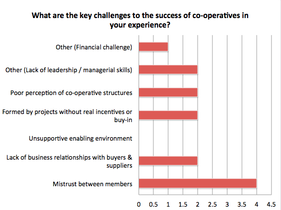
    Survey on Challenges to Co-operative Development

Submit
Picture


Examples from the Field

Picture
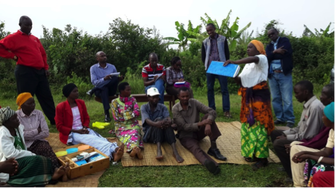
Co-operative members prepare for their Savings & Lending Group meeting

Selling to External Market Channels - Uganda

The Global Communities’ co-operative development program, Developing Economic Strengthening Interventions for Group Production (DESIGN), in Uganda, has been trying to understand the reason that co-operative members often sell to channels outside of the co-operative. The project-supported co-operative, Kyeizooba Twimkye Cooperative Society, had 245 members in 2015, yet only 97 members sold their harvested beans through the co-operative. The DESIGN team has been consulting closely with the co-operative board and the entire membership to discuss ways to improve patronage. The DESIGN team learned that the lack of funds to pay farmers upon delivery was a key reason why farmers did not sell through the co-operative; this reasoning is strengthened by the fact that harvest periods coincide with periods of other costs, requiring cash. At the co-operative level, beans are held in storage, waiting for the price in beans to rise in the market, meaning that members are not paid until the beans are sold. In response, the DESIGN team will introduce the Internal Savings and Lending Group (ISLG) methodology to the co-operative, which will help the members access funding during the marketing season. ​

Reducing Side-Selling - Rwanda

The Global Communities' co-operative development program, Enabling Market Integration through Rural Group Empowerment (EMIRGE), in Rwanda, has been working to reduce side-selling through the introduction of a membership production register, in which every member is registered, along with their expected and achieved production quantities. If there are any differences between expected and achieved production volumes - particularly if they are lower than expected - it is then explained. Failure of an explanation would lead to the concerned member being penalized by being charged amounts equal to the difference. As a result, EMIRGE has seen a reduction in side-selling. 

Lack of Transparency - Rwanda

A membership satisfaction survey report in the Global Communities' co-operative development program, EMIRGE, in Rwanda, concluded, “there was discontentment with the manner with which funds were spent in a number of co-operatives. Thirty-five percent of the respondents did not know whether or not their co-operative had taken out a loan while about sixty-one percent were unsatisfied with the loan’s management”.

Distrust of Co-operative Structure - Uganda

The Global Communities’ co-operative development program, DESIGN, in Uganda, still faces challenges of trust around the co-operative structure after an essential nationwide collapse of co-operatives decades ago.
Powered by Create your own unique website with customizable templates.
  • Home
  • Learning Themes
    • Market Linkages
    • Gender
    • Nutrition
    • Incentives
    • Performance Tools
    • Co-operative Challenges
    • Project Role
    • Stakeholder Dialogues
    • Youth
  • Guidelines
  • Resources
  • Surveys & Research
    • Current Research
    • Online Surveys
    • Survey Results
  • Blogs from the Field